

CodeGorilla: secondment under the Wtta, and Social Return you can prove
After their training, CodeGorilla seconds its participants to clients. That brings the Wtta, equal pay and Social Return into play. No existing system could handle that combination, so we built one together.

The challenge: secondment, Wtta and Social Return in one system
CodeGorilla trains people to become IT professionals and then seconds them to clients. From 1 January 2027 the Dutch Wtta applies: staffing providers need a licence and must be able to show that a temporary worker receives equal pay. That means comparing not just the hourly wage, but the full package of a permanent employee at the client.
On top of that, clients want to know how much Social Return they deliver by working with CodeGorilla. CodeGorilla handled this with several systems and subscriptions side by side. None of them covered the combination, and nothing was scalable.
Separate processes and systems for placements, hours, pay and Social Return. Inefficient and error-prone.
The Wtta requires verifiable records. Without them you run a risk once enforcement starts, and so does the client.
One platform that records what secondment requires and keeps track of the Social Return delivered.
The approach: the same way of working, a different problem
Just like with the Academy (read the case), we started at the table with CodeGorilla, sharpened the brief together and built in sprints, with feedback after every round.
Equal pay, to the cent
For every placement the platform puts the package of a permanent employee next to that of the temporary worker. You see per component where the difference is and how to compensate it. Every calculation is verifiable and is approved before it is locked.
Social Return per client
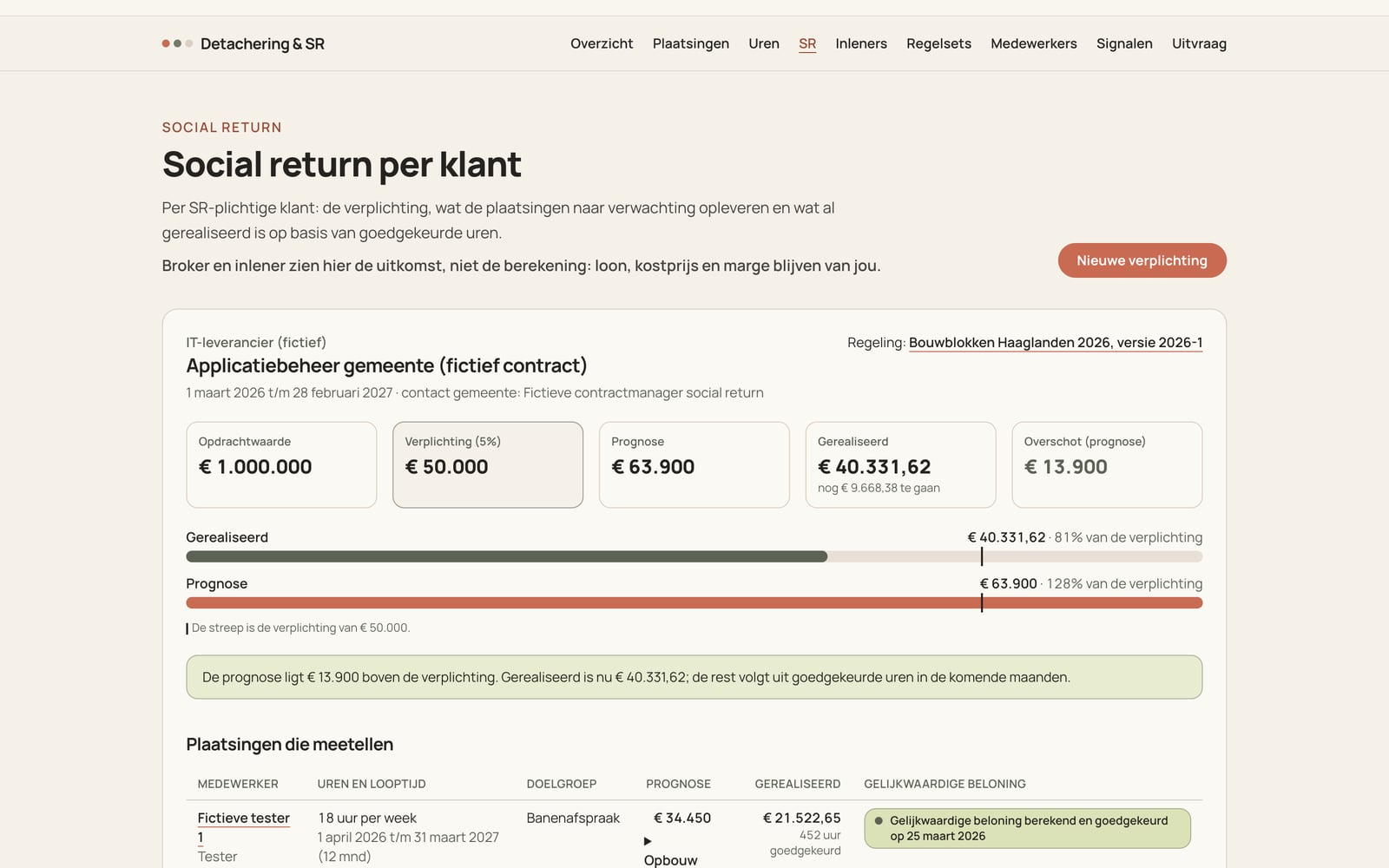
Per contract you see the obligation, what the placements are expected to deliver and what has already been realised based on approved hours.
Everyone sees what fits their role
The staffing provider sees everything about its own employees. A client approves hours and sees Social Return and Wtta status, but never wages, cost price or margin. That is enforced in the system, not just hidden on screen.
Signals before things go wrong
Every morning the platform checks which placements are facing a change, such as a pay step, a collective agreement increase or the indexation of the minimum wage. For each signal you create a draft calculation, which a person checks and approves.
A look inside the platform
All names, organisations and amounts on these screens are fictional.
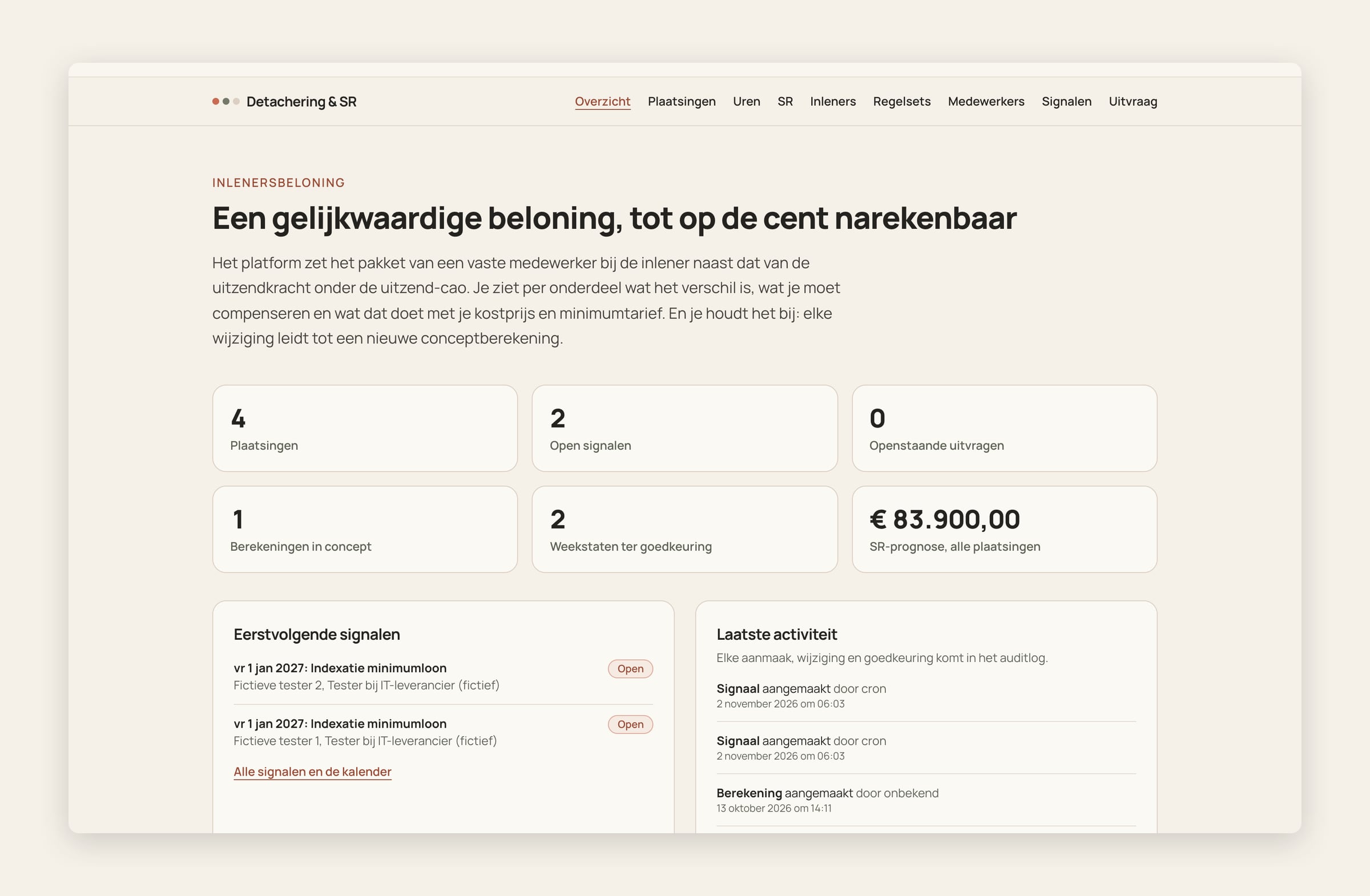
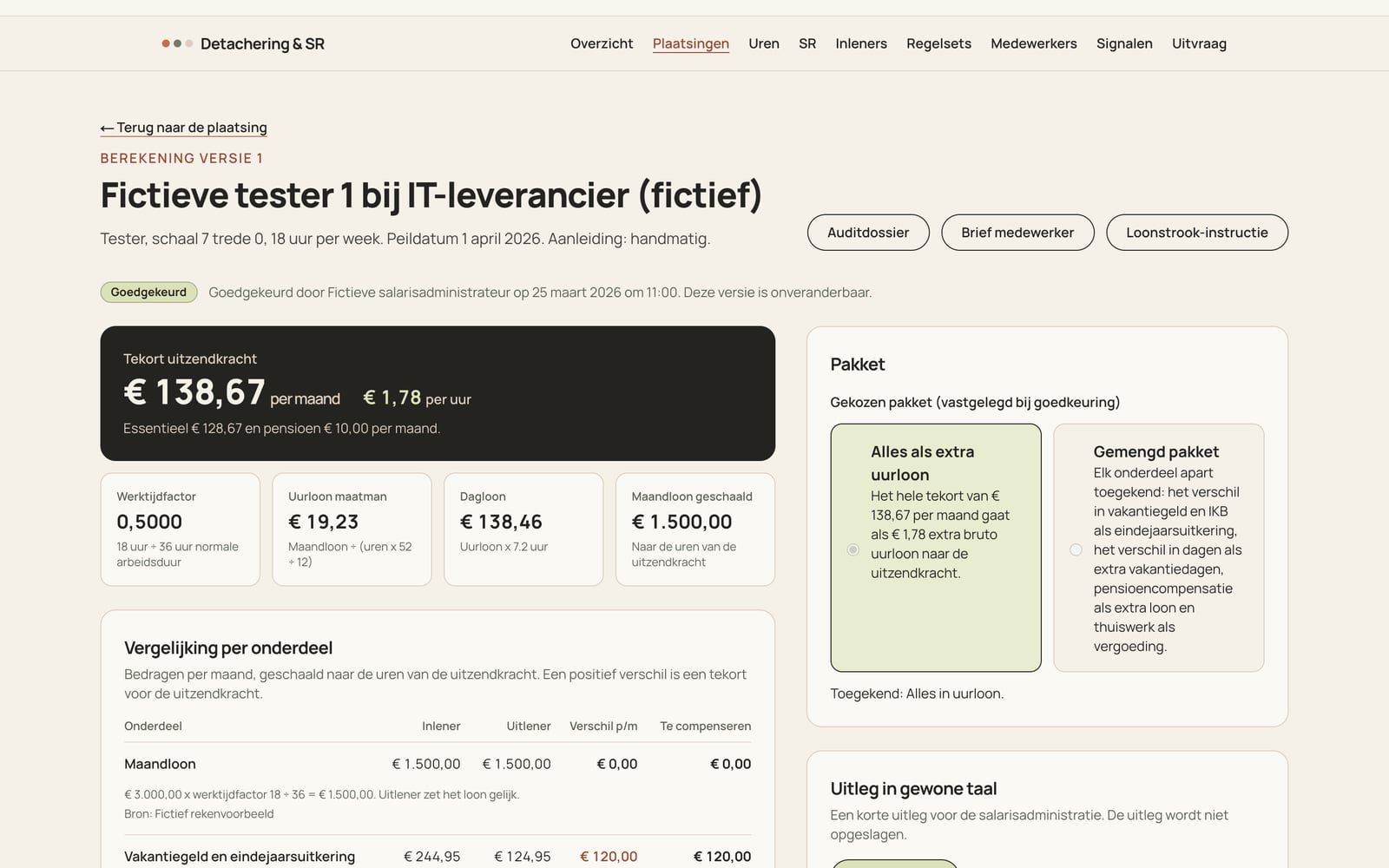
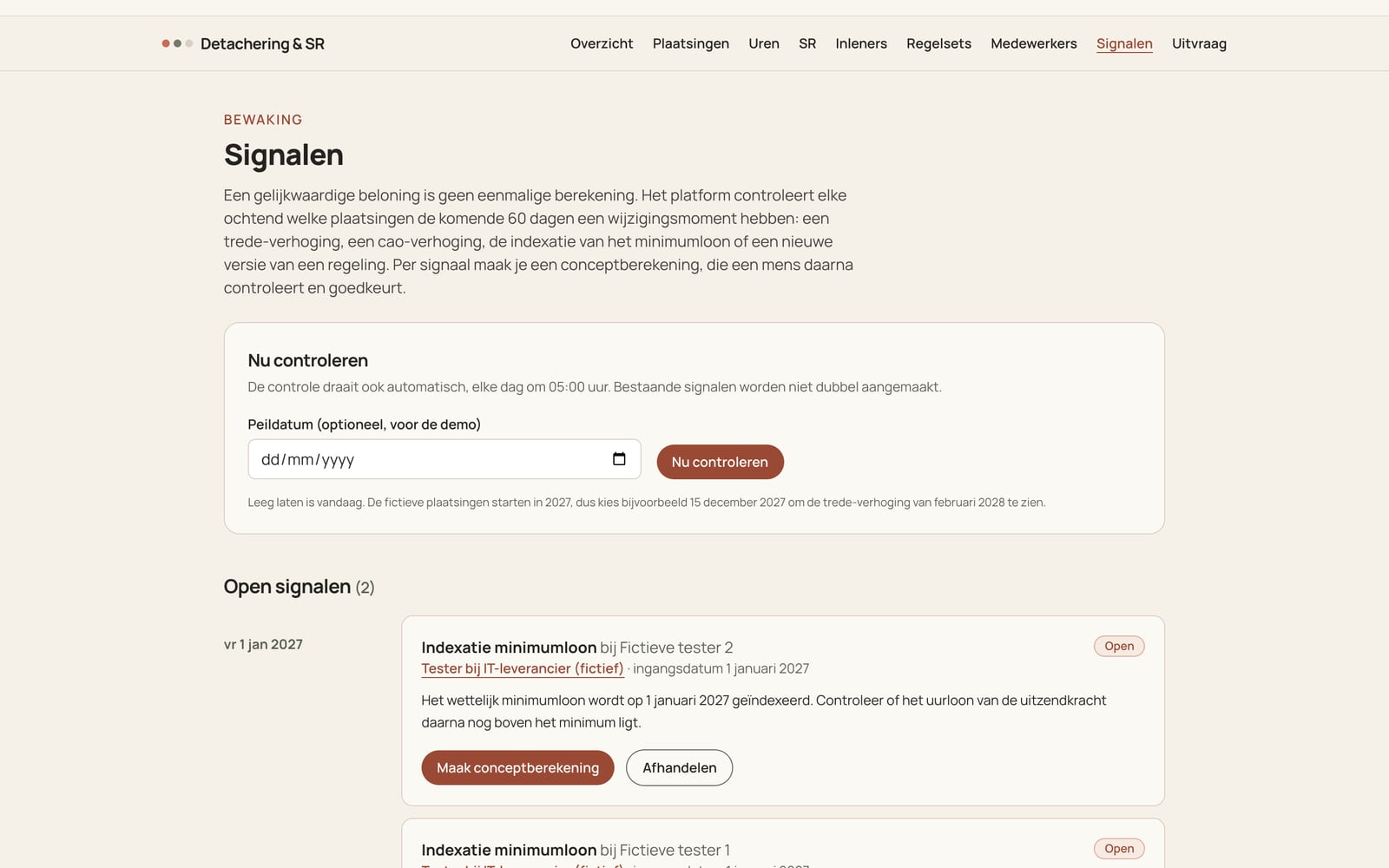
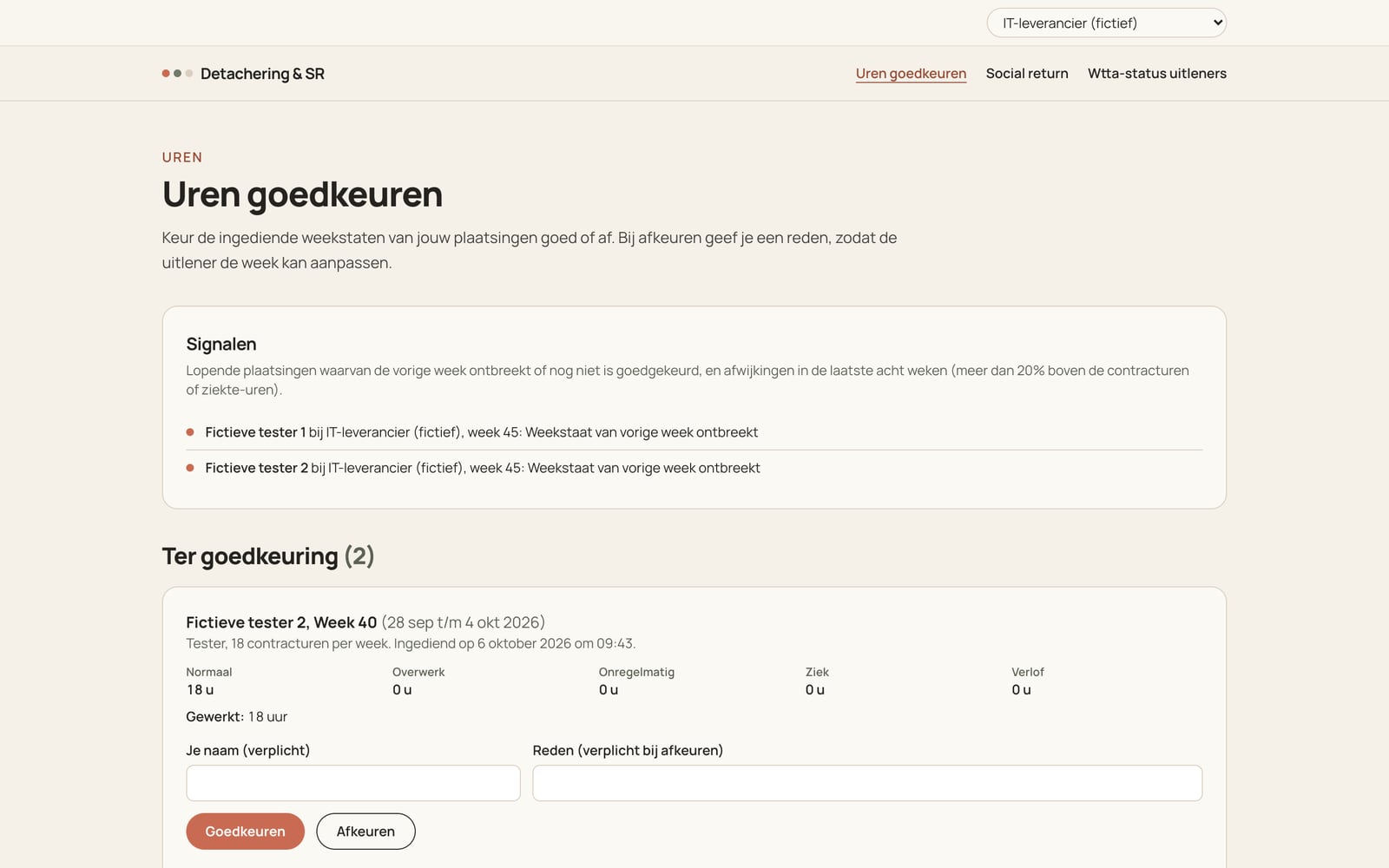
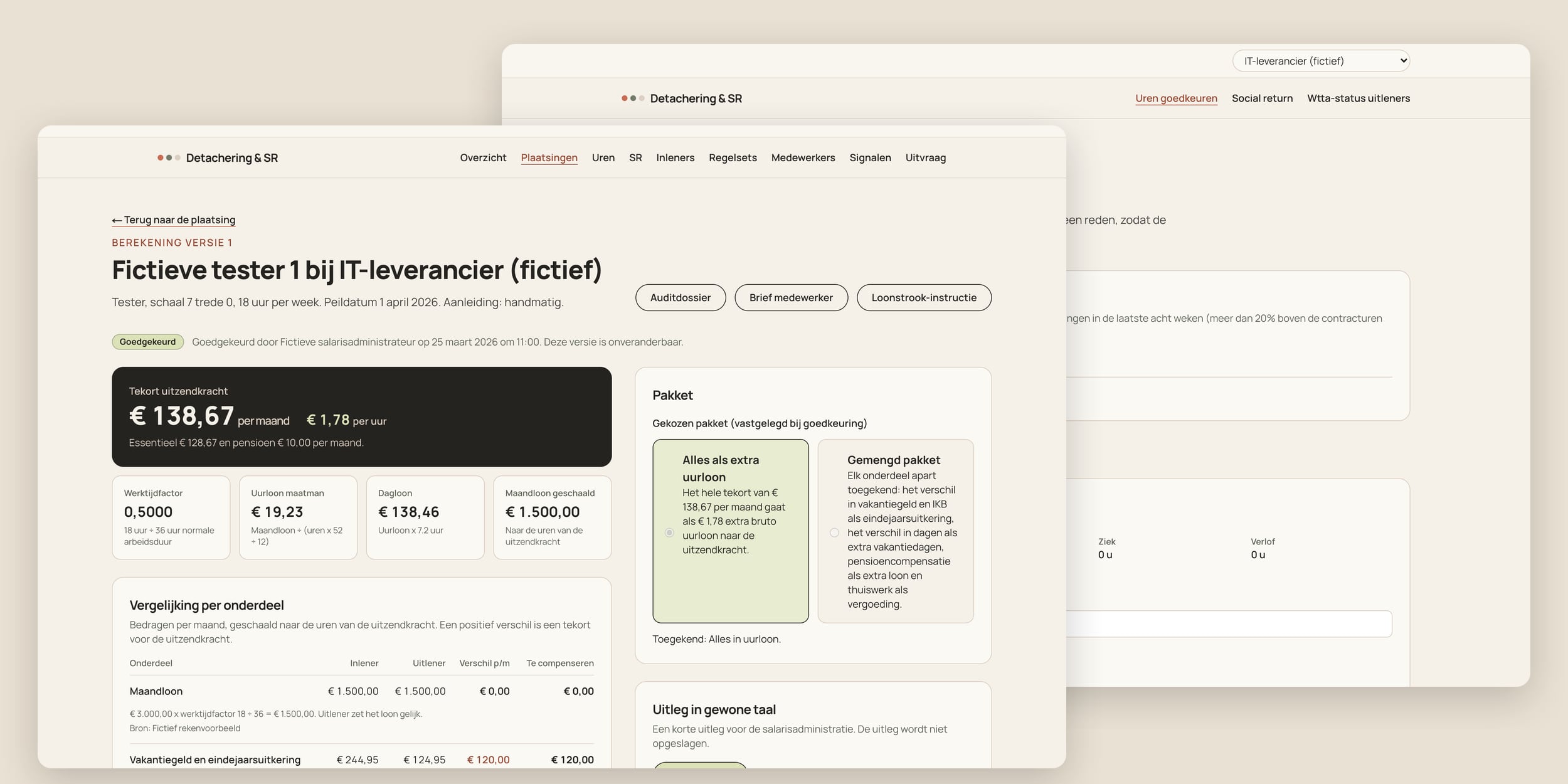
The platform records what CodeGorilla needs for secondment: placements, timesheets, the equal pay calculation and the file behind it. Every change leads to a new draft calculation, and earlier versions are kept.
Clients see their Social Return per contract, without the calculation behind it. CodeGorilla now has one system that fits its own way of working, instead of a pile of separate tools and subscriptions. And it keeps developing it with Empathree.
You do not win at regulation by just rebuilding a form. It only works when the rules are built into the process, and everyone sees exactly what fits their role.
“We had many different processes and systems to deliver the quality of service we stand for, but it led to inefficiency, sloppiness and a pile of subscriptions. There was no single system that could make our business scalable.”

Book a call with Marc or Maarten
Tell us briefly what you are running into. We will get in touch to see whether and how we can help. No sales pitch, just a concrete conversation.


- Reply within 1 working day
- You talk to Marc or Maarten directly